Entering the second quarter of the poetry unit only meant one thing, the performance criteria was making an appearance. As fun as it is to harshly critique slam poets, acting like the Simon Cowell of the judiciary board, when it came time to recite poetry of our own, I can wholeheartedly say it is nowhere near as easy as performers make it look. You see, a poem recited and a poem performed can dramatically affect the interpretation or purpose the poem is portraying by the change of pace, pitch or even gesture.
I discovered that when writing poetry I tend to make up my own… lets call it neologism.. and it became apparent that no matter how may wavy red lines Microsoft word beams in my face or how much of an anxiety attack grammar check, I felt that the software designed for writing was the one at fault. One example would have to be my protest poem written to protest against Liv protesting a protest poem, I’m going to say protest one more time: PROTEST! This genre of poetry really evoked how open poetry is to concepts and ideas, and how nearly impossible it is to match 4 syllables and rhyming consistently across three stanzas. It also showed an example of how pauses and accents on words of vowels can separate and enhance its purpose.
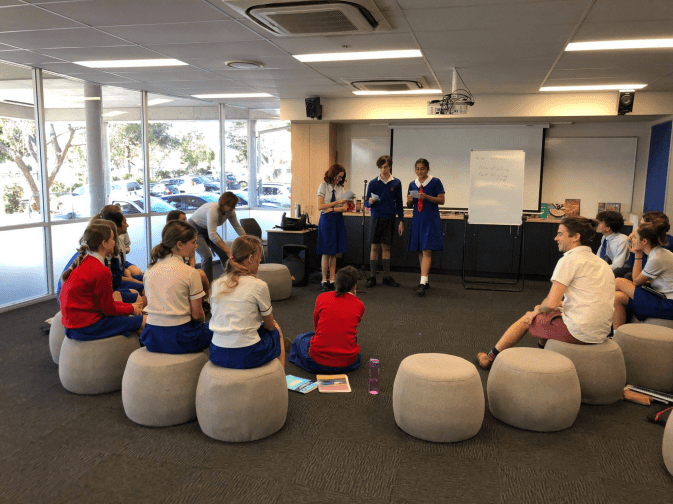
We were fortunate to have Simon Kindt, a standup poet, reiterate his reasons for poetry; suggesting it was a language for those who couldn’t simply express in standardised speech. Which was really fascinating, to say the least. He also taught us that poetry slams are more for advocation rather than competition, staging many ways the audience could be incorporated into the performance to enhance the meaning for example; closing your eyes and laying down. Simon Kindt also made a note of saying that when writing and presenting our own poems, how important it is to sell it to the audience, not necessarily theatrically but passionately.

 Shayna Jahoots Takes On POETRY